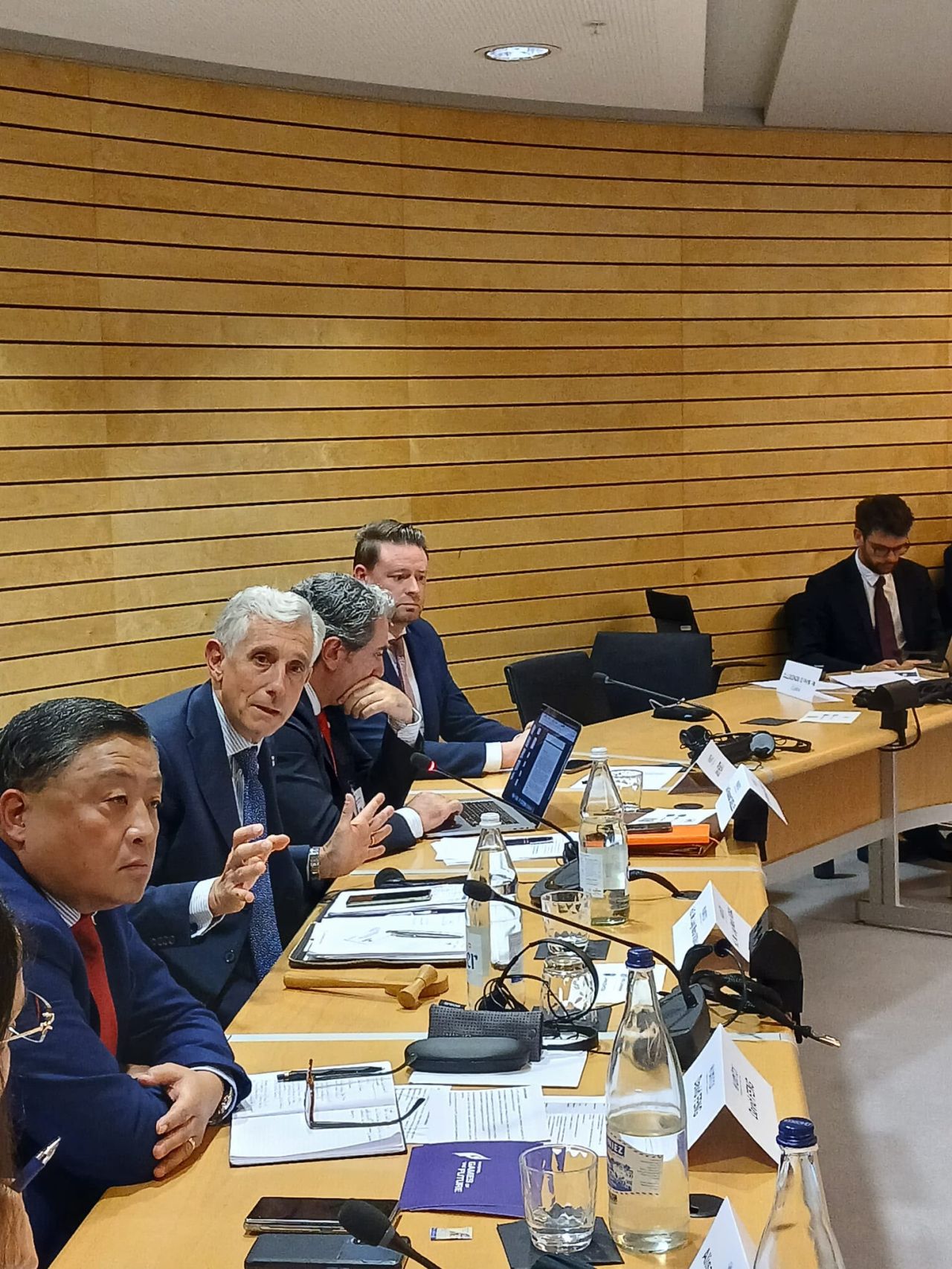
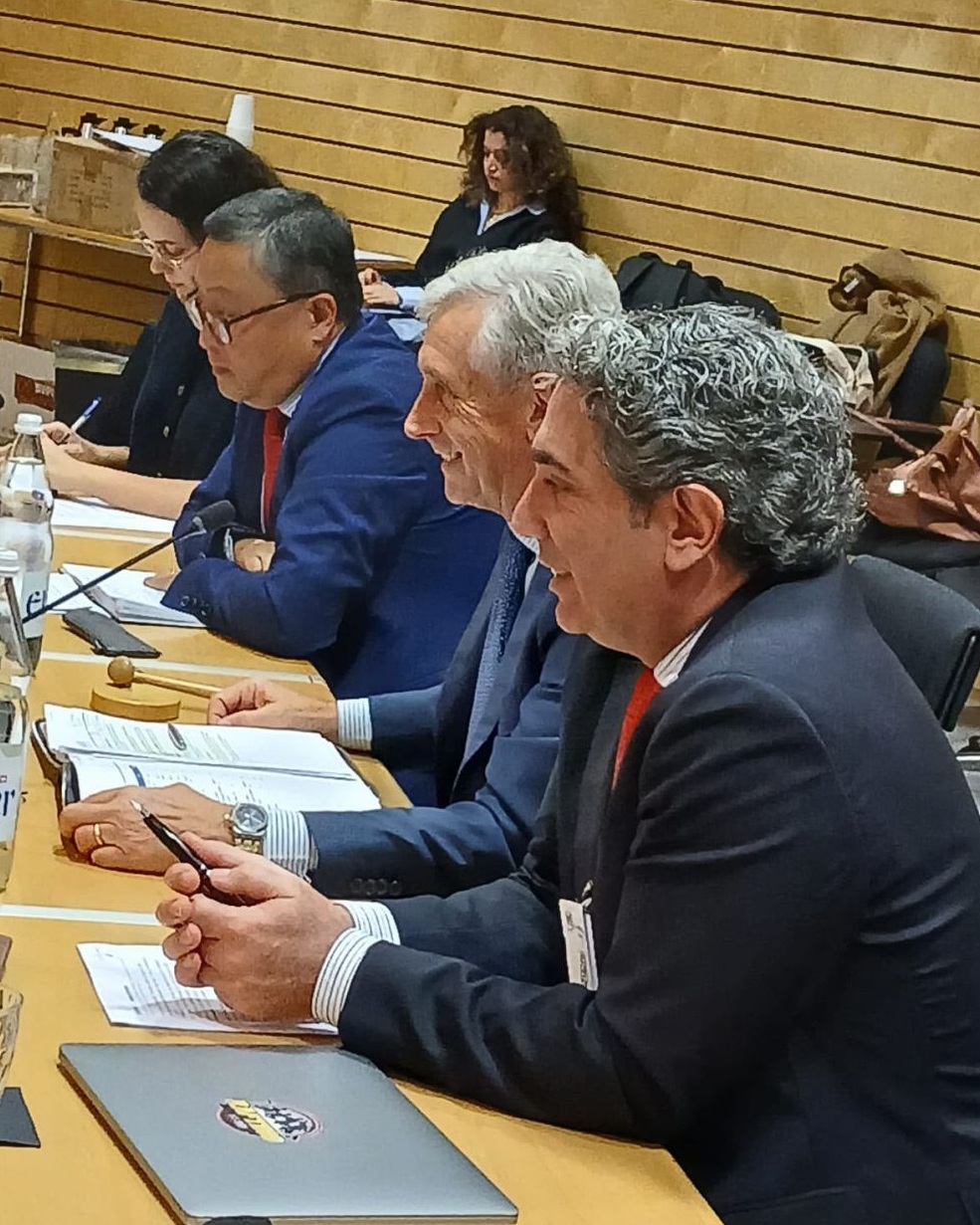
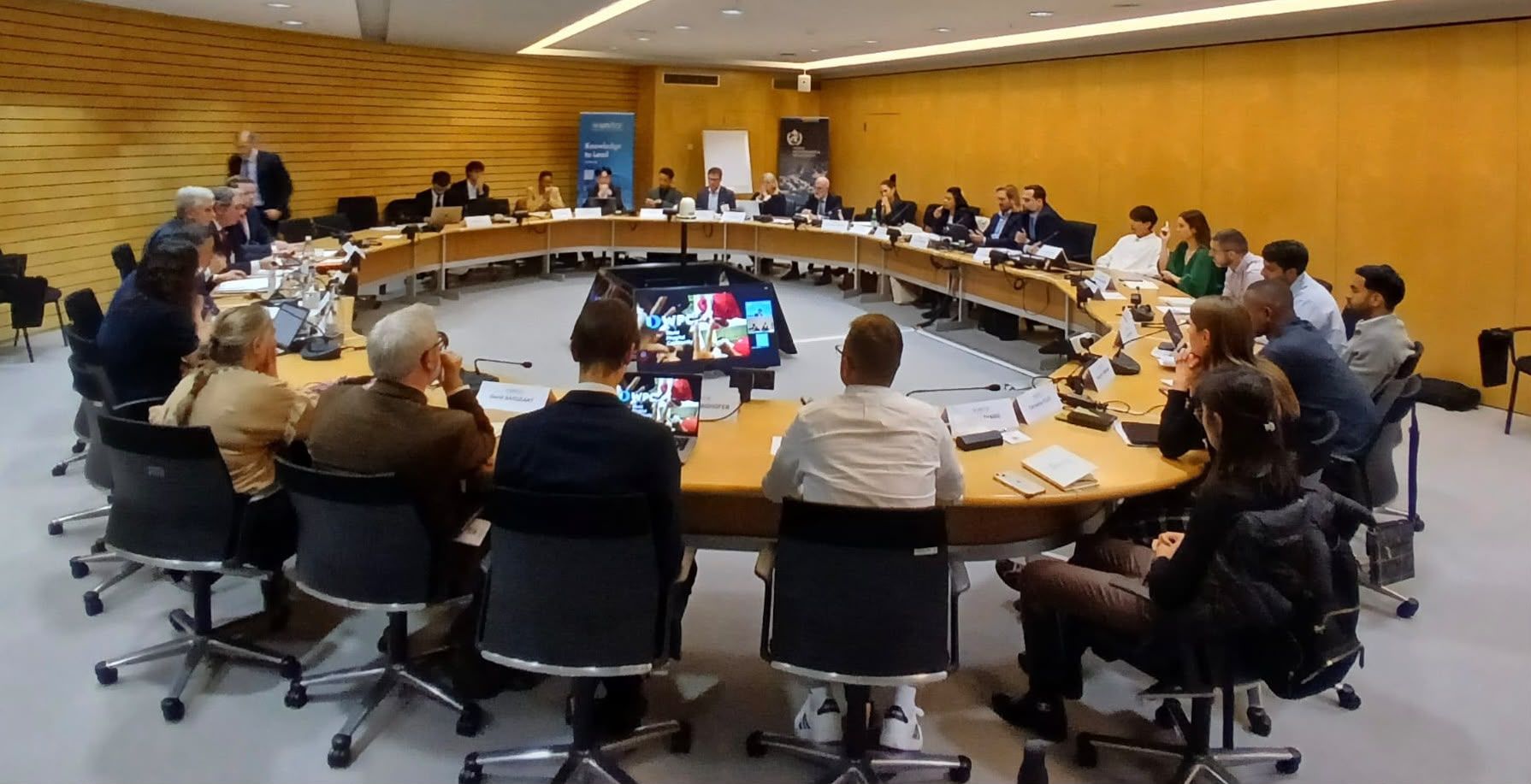
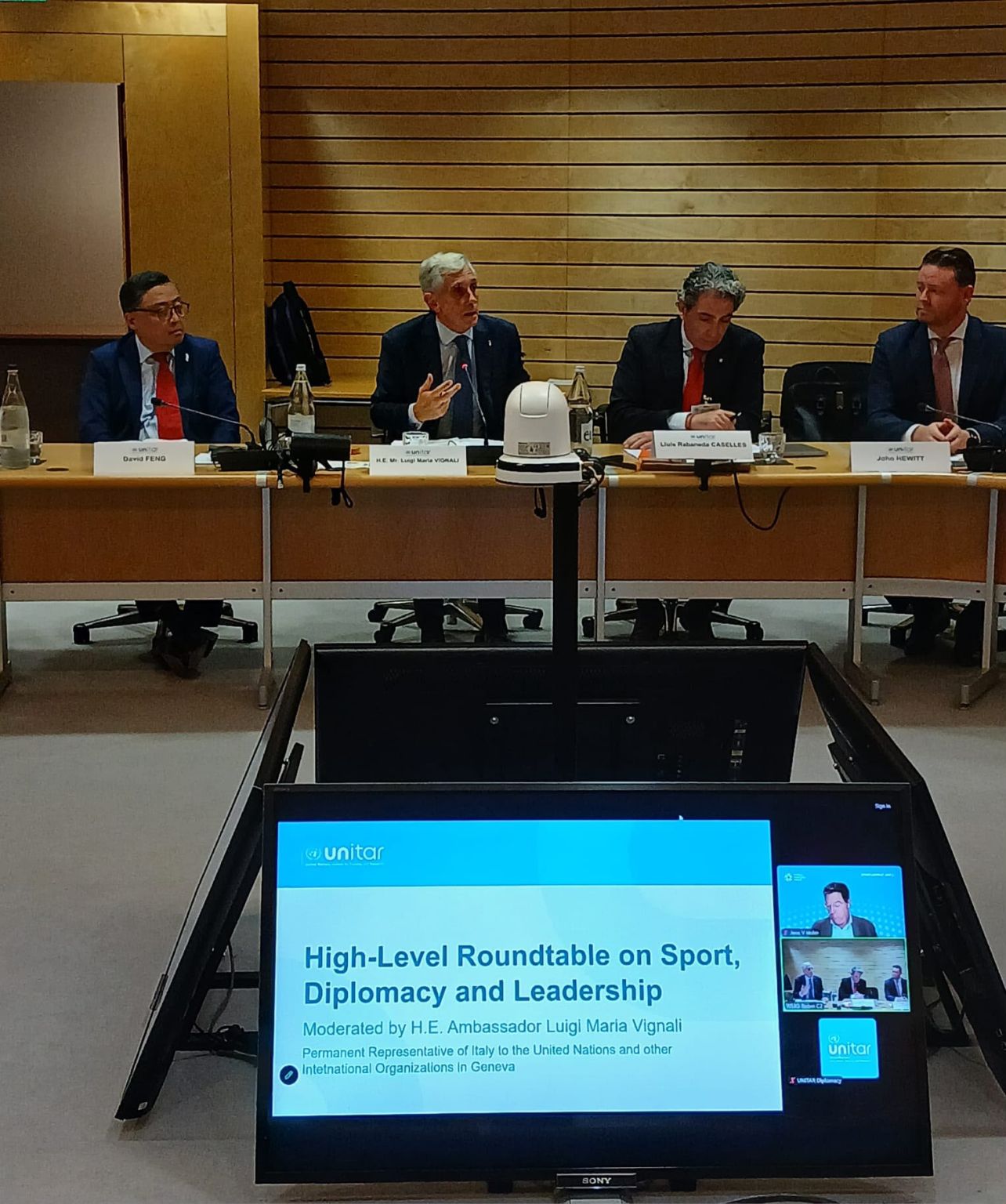
David Feng, Chairman of the World Phygital Community (WPC), joined senior representatives of international sports organizations at the High-Level Roundtable on Sport, Diplomacy and International Leadership, organized by the United Nations Institute for Training and Research (UNITAR) in Geneva as part of its Executive Diploma in Sport Diplomacy.
Drawing on his previous experience at the International Olympic Committee (IOC), he shared his perspective on how sport can bring together governments, institutions and communities across different cultural and political backgrounds.
The roundtable was led by Ambassador Luigi Maria Vignal, Italy’s Permanent Representative to the UN in Geneva, and featured perspectives from other leaders in international sport, including Jens Holm, CEO of World Masters Sport, Lluis Rabaneda Caselles of Paddle Worldwide, and Alisa Shcherbachenya of the International Boxing Association (IBA).
The wider Executive Diploma brought together professionals from across the international sporting, governmental and institutional landscape, representing organizations such as the United Nations system, UEFA, the Saudi Tourism Authority, the Saudi Olympic and Paralympic Committee and many more. Participants came from across Europe, Asia, Africa, Oceania, the Middle East and North America, reflecting the program’s broad international reach.
Speaking about his current role at WPC, Feng highlighted the importance of building trust, maintaining transparency and delivering on commitments as the foundations of a credible international sports community. WPC brings together organizations across more than 100 countries, working to develop phygital sport through common rules, competition pathways and international cooperation.
“Sport gives people a common platform, but a platform alone is not enough. We need credible organizations, committed partners and the willingness to turn shared interests into practical cooperation”, said David Feng.
The discussion also explored how sports organizations can support the diplomatic and development objectives of governments and cities while maintaining their independence and sporting responsibilities. Feng highlighted the potential of cooperation between WPC and the International School Sport Federation (ISF), particularly in creating new opportunities for youth participation and engagement.
John Hewitt, International Marketing and Communications Director of Phygital International, also attended the program and participated in a separate testimonial session with UNITAR representatives, experts and participants, providing an opportunity to discuss the potential for closer cooperation between WPC and UNITAR.
John Hewitt, said: “Sport has a unique ability to connect people, organizations and cultures, but turning those connections into lasting relationships requires dialogue, understanding and a shared vision. Programs like UNITAR’s Executive Diploma in Sport Diplomacy provide an important opportunity to exchange perspectives, learn from different experiences and explore how sport can contribute to international cooperation. For WPC, being part of these conversations is valuable as we continue to introduce phygital sport to new audiences and build relationships across the international sporting community”.
The five-day Executive Diploma, organized by UNITAR’s Division for Multilateral Diplomacy, brings together professionals from sport, government, international organizations, academia and the private sector to explore the role of sport in diplomacy, international relations and sustainable development.
The participation of Feng and Hewitt reflects WPC’s engagement with the wider international sporting and institutional community, as well as its commitment to developing phygital sport through dialogue, credible governance and partnerships.